Stages of Fibromyalgia:
Fibromyalgia affects people in very different ways. Some individuals continue working and managing daily activities for years, while others experience severe fatigue, widespread pain, and emotional struggles that greatly impact their quality of life.
Living With Fibromyalgia: A Different Journey for Every Person
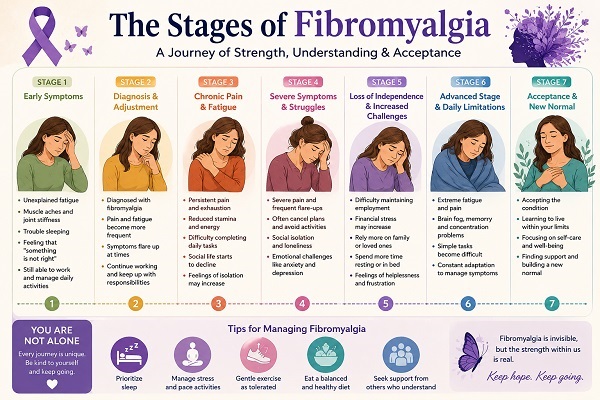
Although there is no official medical staging system for fibromyalgia, many patients describe their experience as progressing through different emotional and physical phases over time. These stages reflect changing symptoms, lifestyle adjustments, and the emotional impact of living with chronic pain.
This article explores a patient-centered perspective on the possible stages of fibromyalgia while emphasizing compassion, understanding, and acceptance.
Stage 1: Early Fibromyalgia Symptoms and Unexplained Fatigue
In the beginning, many people notice persistent tiredness, body aches, and stiffness that seem unusual. Daily tasks may feel more exhausting than before, but the cause is often unclear.
Common early signs may include:
- Frequent muscle soreness
- Trouble sleeping
- Low energy levels
- Joint discomfort
- Difficulty concentrating
- Feeling physically drained after normal activities
At this stage, most individuals can still manage work, school, social activities, and family responsibilities. However, they often sense that something is not right with their health.
Many people first mention these symptoms during a routine medical appointment while searching for answers.
Stage 2: Receiving a Fibromyalgia Diagnosis
After medical evaluations and discussions with healthcare professionals, some people finally receive a diagnosis of fibromyalgia. For many, this brings mixed emotions—relief at having an explanation, along with uncertainty about the future.
During this phase:
- Pain and fatigue may become more frequent
- Symptoms can flare up unexpectedly
- Over-the-counter pain relief may provide temporary comfort
- Daily life is still manageable, but more challenging
Even with ongoing discomfort, many individuals continue working, attending social gatherings, and maintaining relationships. They may begin learning more about chronic pain management, lifestyle adjustments, and symptom tracking.
Stage 3: Chronic Pain, Fatigue, and Lifestyle Changes
As symptoms become more persistent, fibromyalgia may begin affecting work performance, social life, and emotional well-being.
People in this phase often experience:
- Constant exhaustion
- Increased pain sensitivity
- Reduced stamina
- Sleep disturbances
- Mental fatigue or “fibro fog”
After completing daily responsibilities, many individuals feel they have little energy left for hobbies or social activities. Canceling plans becomes more common, which can sometimes lead to feelings of guilt, frustration, or isolation.
Friends and family members may not fully understand the invisible nature of chronic illness, making emotional support especially important during this stage.
Stage 4: Severe Fibromyalgia Flare-Ups and Emotional Struggles
In this stage, symptom flare-ups may become more intense and unpredictable. Good days may feel rare, while physical and mental exhaustion become more difficult to manage.
Challenges often include:
Increased Physical Limitations
Simple activities may require significantly more energy than before. Tasks that were once routine can now feel physically draining.
Social Isolation and Loneliness
Repeatedly declining invitations or needing extra rest can lead to reduced social interaction. Some people feel misunderstood by others who cannot see their pain.
Emotional Health Concerns
Living with long-term discomfort may contribute to:
- Stress
- Anxiety
- Frustration
- Feelings of sadness or discouragement
During this period, pacing activities and prioritizing rest become increasingly important.
Stage 5: Loss of Independence and Daily Function Challenges
For some individuals, fibromyalgia symptoms may become severe enough to interfere with employment and independent living.
This stage can involve:
- Difficulty maintaining a full-time job
- Financial stress
- Increased reliance on family support
- Spending more time resting or recovering from flare-ups
Many people also struggle emotionally as their routines and sense of independence change. The unpredictability of symptoms can make planning everyday activities difficult.
Even so, many individuals continue searching for treatments, lifestyle strategies, and support systems that improve their quality of life.
Stage 6: Advanced Fibromyalgia and Ongoing Symptom Management

At this point, fibromyalgia may affect nearly every aspect of daily living. Pain, fatigue, cognitive difficulties, and sensitivity to physical activity can become long-term challenges.
Common experiences may include:
Extreme Fatigue and Low Energy
Basic tasks such as showering, cleaning, dressing, or shopping may require significant effort and recovery time.
Brain Fog and Memory Problems
Many people report concentration difficulties, forgetfulness, and trouble following conversations.
Emotional Burnout
Long-term chronic illness can feel mentally exhausting, especially when symptoms are invisible to others.
Constant Adaptation
People often develop routines focused on:
- Energy conservation
- Pain management
- Rest and recovery
- Simplifying daily tasks
- Avoiding symptom triggers
While treatments may help reduce symptoms for some individuals, fibromyalgia management usually involves ongoing lifestyle adjustments rather than a single cure.
Stage 7: Acceptance, Adaptation, and Finding a New Normal
Acceptance does not mean giving up. Instead, it often means learning how to live more gently and realistically with a chronic condition.
For many people, this stage includes:
- Understanding personal limits
- Building healthier routines
- Practicing self-care without guilt
- Seeking supportive relationships
- Learning symptom-management techniques
- Focusing on emotional well-being
Acceptance may also help individuals regain a sense of control and reduce the emotional burden of constantly fighting against their condition.
Everyone reaches this stage differently, and there is no specific timeline for adaptation.
Why Fibromyalgia Experiences Differ From Person to Person
No two people experience fibromyalgia in exactly the same way. Symptoms, pain levels, emotional impact, and physical limitations can vary greatly.
Factors that may influence symptom severity include:
- Stress levels
- Sleep quality
- Physical activity
- Other health conditions
- Emotional health
- Access to medical care and support
Because fibromyalgia is highly individualized, comparing one person’s journey to another can be misleading and unfair.
Building Support and Understanding for Fibromyalgia Patients
Stages of Fibromyalgia:
Living with chronic pain can feel isolating, especially when others do not fully understand the condition. Support from family, friends, healthcare providers, and chronic illness communities can make a meaningful difference.
Helpful forms of support may include:
- Listening without judgment
- Respecting physical limitations
- Encouraging healthy routines
- Offering practical assistance
- Learning more about fibromyalgia
Compassion and patience often help people feel less alone in their experience.
Final Thoughts on Fibromyalgia Stages and Acceptance
Fibromyalgia is a complex chronic condition that affects physical, emotional, and social well-being. While these “stages” are not an official medical framework, they reflect experiences many people describe while navigating long-term symptoms and lifestyle changes.
Some individuals may relate to only a few stages, while others move back and forth between them over time. What matters most is recognizing that every fibromyalgia journey is personal.
With proper medical guidance, emotional support, healthy coping strategies, and self-understanding, many people learn how to manage symptoms and improve their quality of life over time.